


Virtual Tour Marketing Guide: How to Choose, Prepare, and Promote the Right Property Tour
Compare virtual tours, photos, video, and live showings, then learn how to prepare, promote, and publish property content responsibly in Ontario.
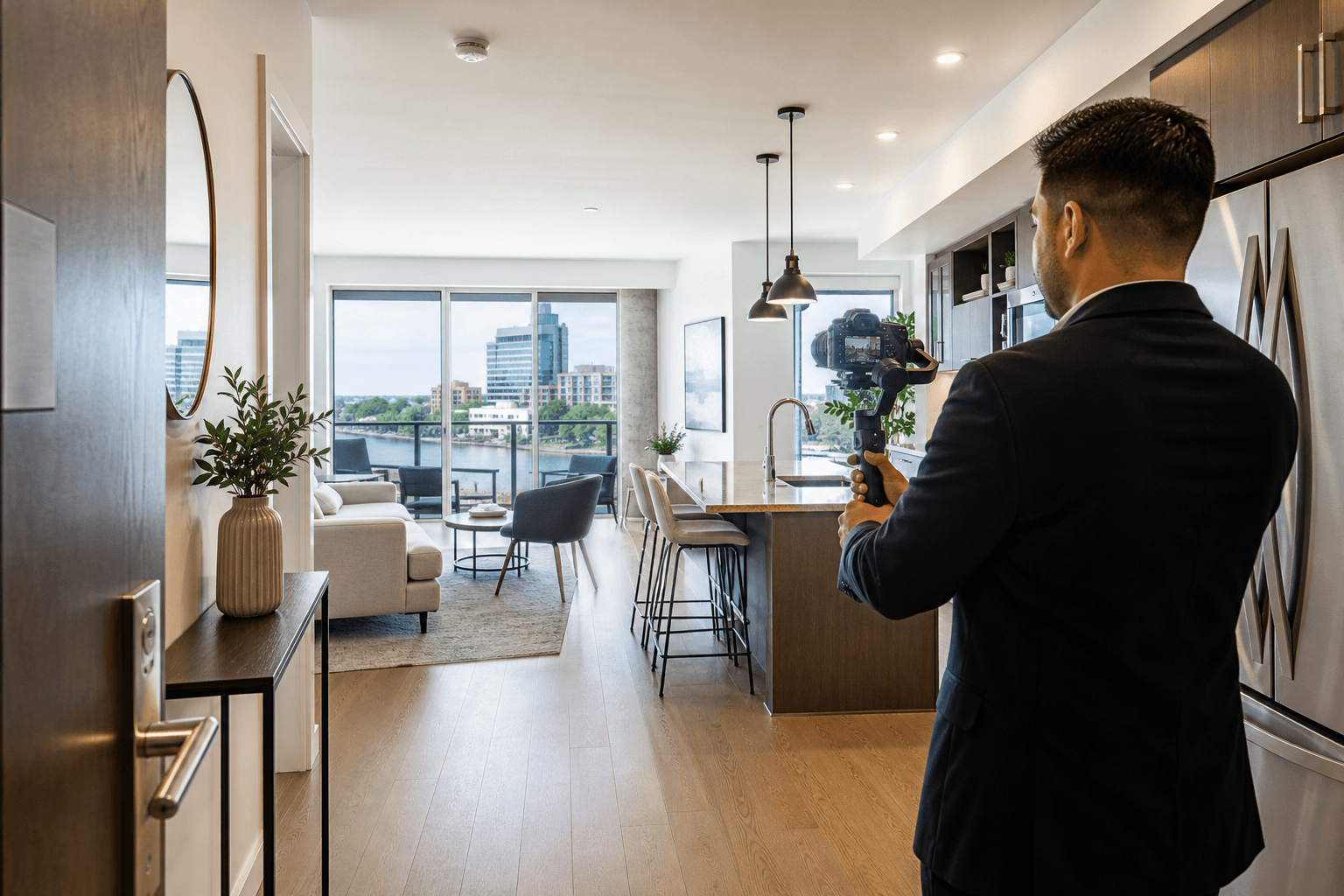
A virtual tour can help buyers or tenants understand a property's layout, condition, and flow before arranging an in-person visit. It is especially useful when distance, scheduling, property size, or an unusual layout makes an initial decision difficult.
However, a virtual tour is not automatically a replacement for professional photography, a video walkthrough, or a live showing. The strongest approach is to match the visual asset to the decision your audience needs to make.
Quick summary

- Use professional photos for fast comparison, video for movement and atmosphere, live virtual showings for questions, and interactive 3D tours for self-guided exploration.
- Prepare the property by decluttering, improving lighting, removing personal information, and confirming that descriptions are accurate.
- Publish the tour alongside listing details, photographs, contact information, and a clear next step. Do not rely on the tour alone.
- In Ontario, review written-consent requirements and retain records when identifiable parties or transaction-related information may appear.
- Measure useful engagement, such as qualified inquiries and viewing requests, rather than assuming a tour guarantees a faster sale or lease.
Choose the right visual asset for the property
Start with the audience, not the technology. Ask what a prospective buyer, tenant, landlord, or commercial occupier needs to understand before deciding whether to inquire or book a viewing.
For a straightforward condo or rental unit, well-composed photos and a short video may provide enough information. A large home, multi-level property, vacant commercial unit, or space marketed to people outside Ottawa may benefit from a self-guided tour that communicates how rooms connect.
Consider four questions:
- How complex is the layout? Multiple floors, long corridors, separate entrances, and unusual room relationships are easier to understand when viewers can move through the space.
- Is the audience remote or time-constrained? A virtual asset can help someone screen a property before arranging travel or taking time away from work.
- Does the property need live explanation? If prospects are likely to ask detailed questions, a scheduled virtual showing may be more useful than a self-guided tour.
- What information must remain private? Occupied homes, rentals, offices, and properties containing personal documents require careful review before recording.
Photos, video, virtual showings, or interactive 3D tours?

These formats serve different purposes. In many listings, the strongest package uses more than one because each asset answers a different question.
| Format | What viewers learn | Best use | Main limitation |
|---|---|---|---|
| Professional photos | Room appearance, finishes, condition, and key features | Listing comparison and first impressions | Still images may not explain flow or scale |
| Video walkthrough | Movement, sequence, atmosphere, and transitions | Showing how the property feels to move through | The viewer usually cannot choose the route |
| Live virtual showing | Property details plus answers in real time | Remote prospects who need interaction | It depends on scheduling and connectivity |
| Interactive 3D tour | Self-guided navigation and spatial relationships | Complex, large, vacant, or remotely marketed properties | It cannot replace inspection or due diligence |
Think of a tour as a screening tool. It can help someone decide whether a property deserves a viewing, but it cannot verify every measurement, building system, repair, sound condition, neighbour issue, or legal matter.
Match the format to the property and audience
Occupied homes and rental properties
An occupied property requires more than tidying. Remove or conceal mail, documents, medication, children's identifying information, keys, alarm details, and anything that reveals a resident's routine or security arrangements. Check mirrors, windows, and reflective surfaces for unintended people or personal details.
Give occupants a clear opportunity to review the planned capture and final asset. For rental marketing, be especially careful that the tour does not reveal a current tenant's identity, belongings, or private space without appropriate permission.
Vacant homes and condos
Vacant properties often benefit from a clear route because viewers cannot rely on furniture to understand scale. Show entrances, room connections, storage, outdoor access, and features that affect how the property will be used. Avoid angles that make rooms appear larger than they are.
Commercial spaces
Commercial prospects usually need more than an attractive sequence of rooms. They may need to assess access, loading areas, ceiling height, layout efficiency, parking, service areas, and the relationship between customer-facing and operational spaces.
For warehouse, industrial, retail, and office properties, combine the visual tour with accurate property details and a way to ask technical questions. Sagar Shah Real Estate describes its commercial guidance as informed by mechanical-engineering knowledge and real-world industrial experience, which is relevant when a prospect needs to assess operational requirements rather than appearance alone.
Prepare the property before capture
Good capture begins before the camera or scanning equipment arrives. Use this preparation sequence:
- Confirm the objective. Decide whether the asset should generate an inquiry, support a showing, help a remote prospect screen the property, or explain a commercial space.
- Complete essential repairs. Fix or disclose issues that could make the presentation inaccurate. Do not edit out a material condition.
- Declutter strategically. Remove objects that block circulation, but leave enough context for viewers to judge scale and use.
- Improve light and access. Open curtains where appropriate, replace failed bulbs, turn on relevant lights, and ensure advertised rooms can be entered.
- Protect privacy. Remove personal documents, photographs, labels, account details, keys, and visible access codes.
- Plan the route. Move logically from the entrance through living or working areas, bedrooms or offices, service spaces, and exterior areas.
- Prepare accurate notes. Confirm room names, features, inclusions, exclusions, parking information, and details that will accompany the tour.
If an area is unfinished, inaccessible, shared, or excluded from the lease or sale, identify that clearly in the accompanying information. Presentation should support accurate decision-making, not create expectations the property cannot meet.
Capture the tour accurately and review it before publishing
Use a consistent route and avoid abrupt movement. Start with clear exterior or entrance context, then show how the property connects. Pause long enough for viewers to understand important spaces without making the sequence difficult to follow.
Review the capture for lighting changes, distorted proportions, distracting reflections, unclear audio, blocked doors, and omitted areas. A tour should not imply that a small room is large or that a view, storage area, parking space, or feature is included when it is not.
Open the final link on a phone and computer before publication. Confirm that it loads, labels are understandable, the contact path works, and the address or identifying details match the approved listing information.
Check privacy, consent, and Ontario advertising requirements
Ontario's advertising regulation restricts including information that could reasonably identify a party to the acquisition or disposition of an interest in real estate unless that party has provided written consent. Review the Ontario advertising regulation and retain relevant consent records before publishing identifiable people, personal belongings, or other transaction-related content.
This is a practical compliance reminder, not legal advice. Consent should be specific enough to show what was recorded, where it may appear, and how long permission applies. If consent expires, circumstances change, or an occupant withdraws permission, pause distribution and seek brokerage or qualified legal guidance.
Also verify brokerage identification, property information, availability, inclusions, and claims about features. A polished tour does not correct an inaccurate listing.
Publish the tour as part of a broader marketing plan
Place the tour where the intended audience can use it. Link it from the listing or property page, include it in follow-up with qualified prospects, and use suitable social or email promotion. Give viewers enough context to act, including property type, location, key facts, availability, and a clear way to request information or a viewing.
A virtual tour works best when paired with professional photos and online exposure so buyers can experience the property from multiple angles. Photos support fast comparison, while the tour explains movement and spatial relationships. Add targeted promotion rather than posting the same asset without considering the audience.
For a commercial property, distribution may need to reach business owners, operators, investors, or representatives with specific operational requirements. For a rental, make the next step and screening process clear. For a home sale, connect the tour to pricing, showing availability, and the broader listing presentation.
Review engagement and improve the next version
Do not judge a tour only by total views. Where platform data is available, review whether viewers begin the tour, reach key areas, return to it, or leave quickly. Compare those signals with inquiries, showing requests, and the quality of questions people ask.
Feedback may reveal that viewers cannot understand the floor plan, need clearer parking information, or want better visibility in a particular room. Update the description, route, or supporting photographs when the same question appears repeatedly. Avoid assuming that a tour guarantees a faster sale, higher price, or more offers.
Pre-publication virtual tour checklist
- The intended audience and purpose are clear.
- Rooms, entrances, exterior areas, and important transitions are shown accurately.
- Lighting, sound, image quality, and proportions have been reviewed.
- Personal documents, photographs, access codes, keys, and identifying belongings are removed or approved.
- Occupant and party consent records have been checked where applicable.
- Room labels, inclusions, exclusions, and availability match the listing.
- Inaccessible, shared, excluded, or unfinished areas are not presented as part of the offering.
- The link works on mobile and desktop, and contact details lead to the correct person or brokerage.
- The tour is supported by professional photos, property information, and a suitable distribution plan.
- Brokerage or legal review has been requested where privacy or advertising requirements are uncertain.
Place the virtual tour within an Ottawa real estate marketing plan
A virtual tour is one component of a property marketing plan, not the plan itself. The appropriate mix depends on whether the goal is to sell a home, find a tenant, lease commercial space, attract an investor, or help a buyer compare options.
In Ottawa, Sagar Shah Real Estate supports residential clients with buying, selling, leasing, home valuation and market analysis, professional photos and online exposure, and targeted marketing strategy. Its commercial services cover warehouse, industrial, retail, and office requirements, with attention to operational fit and technical considerations.
The visual asset should connect to a decision about price, suitability, timing, negotiation, or next steps. A tour can attract attention, but accurate valuation, property information, audience targeting, and responsive follow-up turn that attention into a useful conversation.
Frequently asked questions
Does a virtual tour replace professional real estate photos?
Usually, no. Photos are easier to scan in a listing and help viewers compare properties quickly. A virtual tour adds movement and spatial context, so using both is often more practical.
Should an occupied rental property use a virtual tour?
It may, but privacy and consent come first. Remove personal information, avoid exposing routines or security details, and confirm that occupants understand what will be recorded and where it may appear. A photo set or scheduled showing may be preferable when privacy is difficult to control.
What should buyers verify after watching a virtual property tour?
Verify measurements, inclusions, exclusions, parking, storage, access, condition, fees, and any feature important to your decision. Arrange an in-person viewing and complete appropriate inspections, document review, and other due diligence before relying on the property.
Do I need written consent before publishing identifiable content in Ontario?
Ontario advertising rules include written-consent requirements where information could reasonably identify a party to a real estate acquisition or disposition. Keep written records and seek brokerage or legal advice when the facts are unclear.
Is an interactive 3D tour always better than a video walkthrough?
No. A 3D tour may suit complex layouts or remote screening, while video can communicate atmosphere and movement more efficiently. Choose the format that answers the audience's most important question without unnecessary production effort.
Conclusion: choose the asset that improves the next property decision
The best virtual tour marketing approach is not necessarily the most advanced one. Choose the simplest asset that represents the property accurately and helps the intended audience decide whether to ask questions, book a viewing, compare the space, or move forward.
Prepare carefully, protect privacy, confirm written consent where relevant, check every claim, and publish the tour alongside professional photos, accurate listing information, and targeted promotion. Use engagement and qualified feedback to improve the next version rather than promising a particular result.
Ottawa homeowners, landlords, sellers, buyers, and commercial clients can discuss how visual content fits their broader property goals with Sagar Shah Real Estate, which provides residential and commercial buying, selling, leasing, valuation, and market-analysis support.
Ready to discuss your real estate goals?
Get practical, personalized guidance for your next move in Ottawa.
Book a consultation